Ends in Architecture, 2026
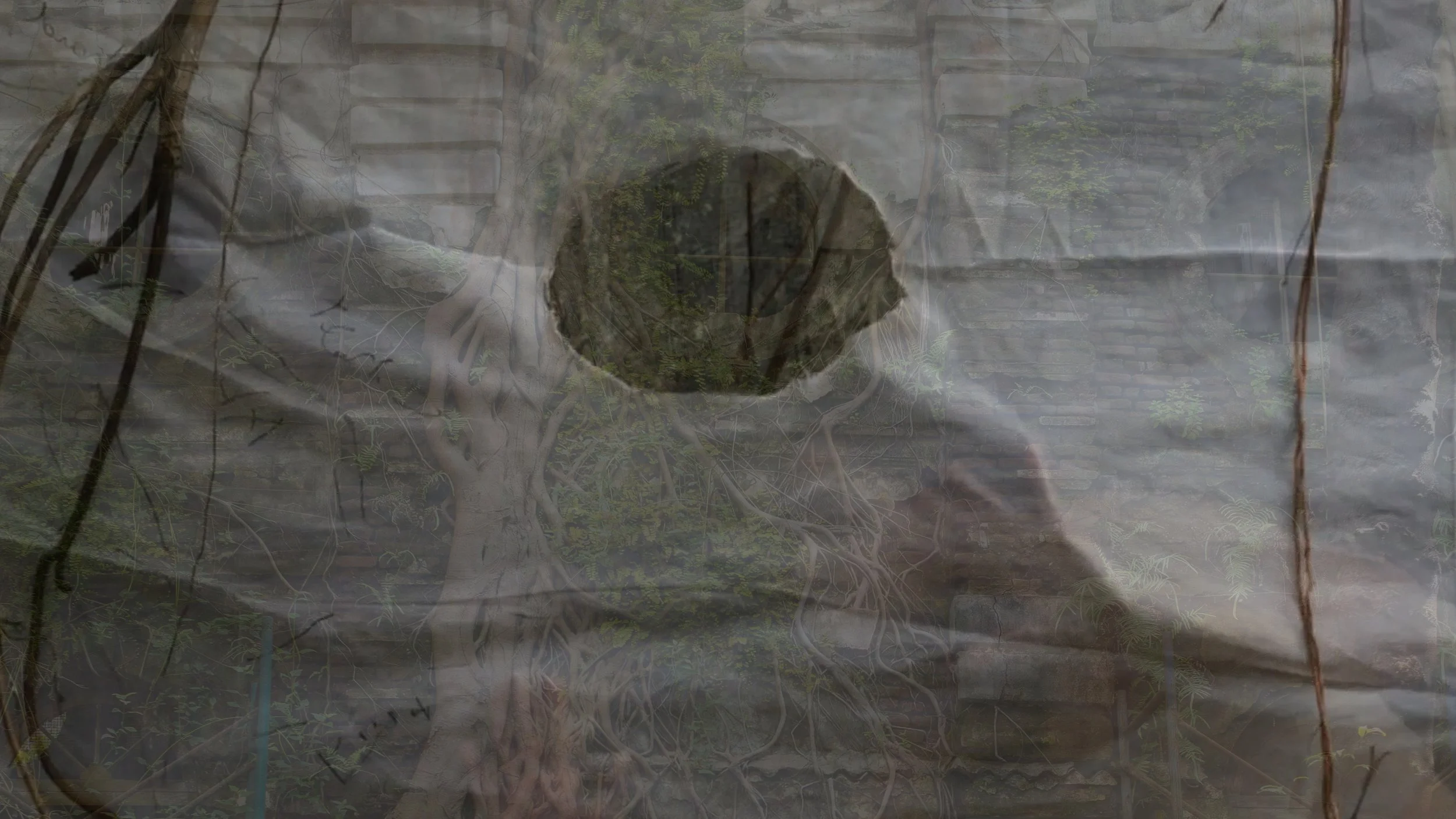
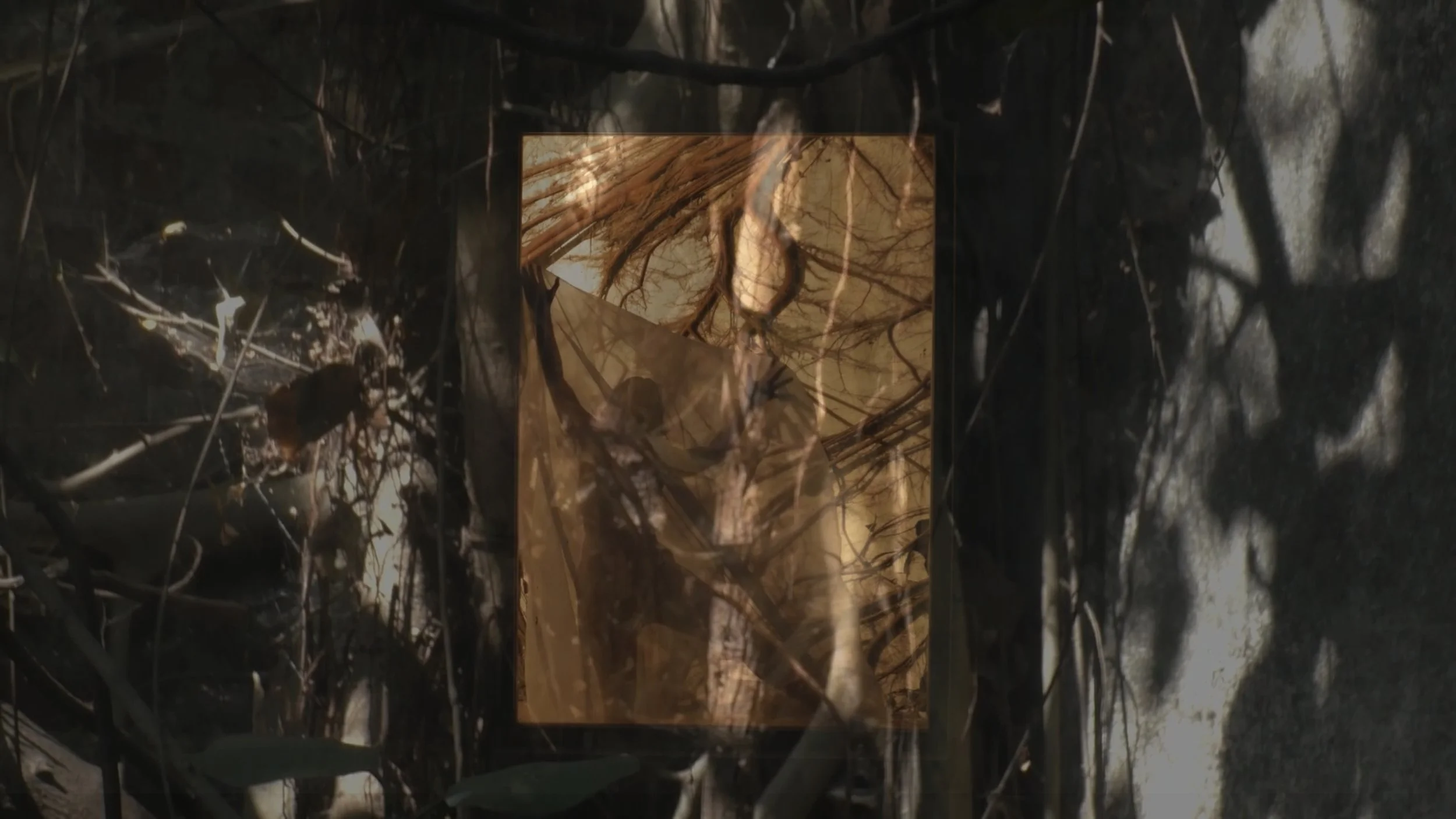
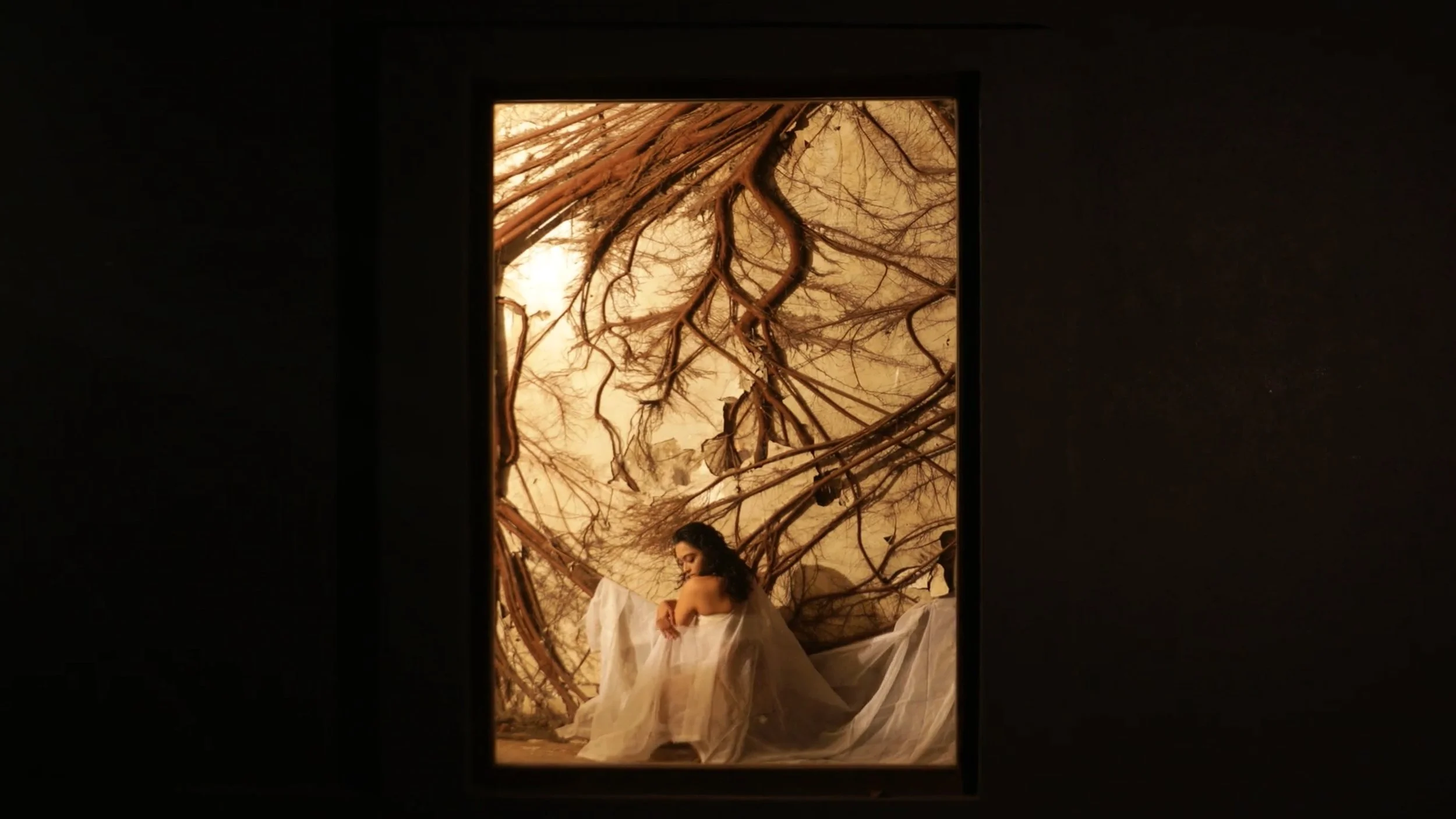
Ends in Architecture is a short video-work that attempts to reimagine the idea of ‘ending’ through the lens of abandoned architecture – a space constructed on a human scale, opens up a possibility of provoking questions of cosmetics and maintenance that goes behind preserving a pristine image of the skin of a body. It acknowledges that a body present in a field is never static, it is always changing, aging, and adapting to the environment it interacts with. It also reimagines ‘ends’ as a plural concept, pushing back against the idea of singularity of ‘ending’, remaining fixed, and gone.
In 1982, the Great Bombay textile strike involving around 250,000 mill workers led to the widespread closure of the city’s mill infrastructures. While most are gone, some remnants are present as abandoned structures, with the ruins of its original facade and walls overtaken by plants and trees on its site. In the absence of humans, ecology has taken over the abandoned architecture of textile mills leaving an alternative landscape of what the site might look like, if it wasn’t controlled and monitored by human standards. To me, it provoked questions of the architect's violence to a site by creating a static environment, and encapsulating time in the object (or a building) that is frozen and doesn’t evolve or adapt to changes. My work ‘Ends in Architecture’, shot in 2023 at one of the abandoned text mills, completed in 2026, attempts to articulate this idea of ‘ending’ through the lens of abandoned textile mill architecture– a space constructed on a human scale, opens up a possibility of provoking questions of maintenance in architecture, or neutralizing surfaces through cosmetics and maintenance.
By framing decay as a dynamic process rather than a failure of maintenance, the project challenges the traditional architectural obsession with permanence and perfection. It treats the peeling paint, the cracking concrete, and the invading plant life as a living, moving design canvas for architectural thinking and knowledge production. The video work explicitly explores the language of architecture in the complete absence of humans. It documents how natural and ecological forces gradually reclaim abandoned structures, treating the growth of moss, plants, and decay on concrete surfaces as a dynamic, non-static form of design.
Ends in Architecture Credits
Writer and Director: Himil Ramani
Producer: Himil Ramani
Cinematographer: Elton Pinto
Sound Credits: Shelly Zheng, Guo Liu, Zhaoxuan Song, Morris Chang
Editor: Himil Ramani
Performer: Trupti Zingade
Stylist: Utkarsha Mishra
Special Thanks to Anurag Kanoria, The Great Eastern Home